Why Do Artists Create?
A Response To the National Academies Question
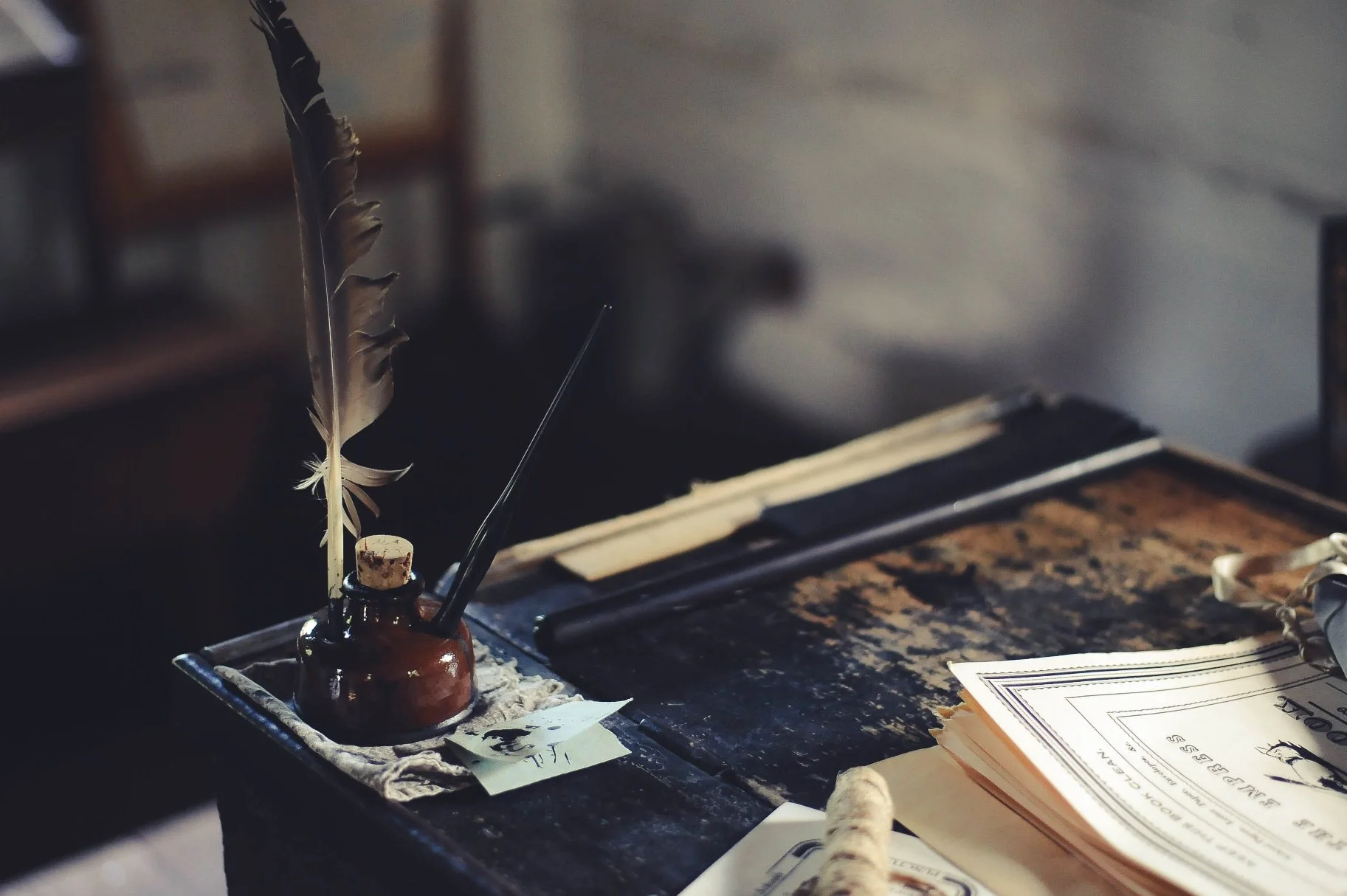
Some weeks ago, I listened as you presented the opinions of two accomplished artists, a writer and a musician. You invited commentary. Here's mine.
These fine gentlemen explained what it means to create, and why -- not only the spark of it, but the far more difficult and down-to-earth efforts to hone the craft, to market, to brand, to work within a world whose commercial orientation often threatens to force a certain conformity into the effort.
Work hard, struggle, persist, fall down (or get kicked down), find allies, create bonds, get encouragement and honest criticism, keep at it, see the thing through (whether poem, essay, painting, song, lyric, symphony, novel, or statue); above all, don't be discouraged.
And if (echoing Kipling) you can do all these things, then perhaps someday peer recognition, adulation or admiration of colleagues; someday, you'll be an artist, my friend. Fame and fortune, or at least a time slot in the first rough draft of history, likely accompanied by anonymity, the ability to buy groceries without anyone knowing who you are or what you do, and all too often a Mozartian burial.
This for those who make it.
Most don't. Of these, many have scrimmed their artistic souls, choosing instead to pay the mortgage, to keep the kids in soccer clothes, the aging parents in whatever fashionable dishabille is most efficient. Economic uncertainty abounds. Most succumb to those sirens of potential success: get a degree, then a job, launch a career, veer unexpectedly, wake up in a You Can't Take It With You moment thirty years later wondering what happened, the saxophone stowed permanently in the closet or donated to the local school, the trapeze artist fastened to the office chair.
We are these unnamed artists. Patrons, surely. Avid readers and listeners, of course. And still, day in and day out, taking pen or other tool in hand to write, paint, compose, sculpt. Some create landscapes around their homes, and that is enough for a season. Some decorate so creatively they astonish their dinner guests, and that, too, can be enough.
And some, perhaps more than we think, try to distill what they see and hear into words, music, paintings, sculptures, day in and day out. They create on the side, leave unfinished far more than they drag to completion, raging against the beast that binds them to creation's wheel. They do the smaller work of bodying forth their world -- a story here, an essay there, a piano suite, a figurine, a poem. And all plagued by the notion that it isn't good enough, it's weekend furniture that once made is best disassembled and cast onto the burn pile.
These are the lonely moments, the lonely, lonely times. The times when there is nothing but pen and paper or the digital page, the stone block, the empty canvas or the blank score, and the realization that no one really cares that you're doing this. But you keep at it, and you create, and life happens, and you create some more, and then life becomes even more intense, sometimes bleaker, more despairing. And still you create.
You create because you have no choice. If you stop, if work or family or eldercare intrudes for too long, you can feel it: a certain withering, a panic of time passing you by, of not being able to accomplish all the work that some spark of energy, purpose, spirit or divine being has insisted you must do before you die. And so you set your queer shoulder to the wheel yet again.
When you are at your best you know it.
When you are at your best, the words flow without pause, the improvisation on the piano keyboard is effortless, the next note or chord coming to you and you meeting it, knowing it will be right. You write and play and create alone. Your best and worst audience is yourself -- best, because while in the creative flow nothing intrudes or goes wrong; worst, because inside your head are the dark voices telling you it's not right, that at best it's inadequate, pedestrian, banal, shopworn, and (especially in our excessively market-driven world) useless.
So you pause, and it's the pause that kills the flow. The pause, the hesitation that stultifies, that creates the lurch in the gait, the clang in the chord, the tarnish in the gold. You try too hard to get it right. You try too hard to meet what you think are someone else's expectations, when you have yet to meet your own. Thus the art falters, the brush splays, the pen loses its ink and the chisel its edge.
Yet you continue. You work in a separate career that takes huge chunks out of your brain and body. You participate in all the bits of life that happen around art, even while art infuses your world through print and song, instrument and statue, landscape and poem. Sometimes you wonder if everyone creates, or if not, that everyone is at least creative in some way.
"Writing a book?" Some will wonder when you nod; most would nod politely back. Already their thoughts are elsewhere, you think. You can describe your story best to yourself, but when trying to explain to someone else what it is that caused you to labor in silence hour upon hour, you fumble, searching for that phrase which will make understandable to anyone: This is the Story you intended to tell, the plot secondary, but the Story -- whether Love or Coming of Age or Quest or Betrayal or some combination of these -- the Story is all.
Until it is nothing, as your friend's eye glazes, or your colleague says, "so it's just another story about…?"
Thus you allow yourself to wither. You cannot speak adequately to defy your sense of insignificance, to overcome your self-denial through confident verbal expression. Of course. It's not important, is it? Of course, it's just another story. It just happens to be yours, and some germ within it might be common to all, some revelation might ring true.
To create is to feel as though what you have done is both the best and the worst, that whether it is music or poetry or novel or essay or painting or sculpture, it is both sinuous and strong, graceful and elegant; while part of you insists that others will see it as a poor stepchild of true art -- misshapen, weak, clumsy and shoddy. Secondary work.
Yet you persist. A career doing something else melts away, and you find you've been asleep all this time. You return to the craft and try again. You unkink the stiff joints, work the muscles, lubricate the rusty parts. You've read the best, recognized the gulf between you and them, and you've forgiven yourself for it: whatever combination of raw talent, persistence, opportunity, connection or luck got them there, you can admire their command of the art, knowing the struggle that awaits anyone who tries.
Some make shoes. Some tell stories about shoemakers, or even of the shoes of the fisherman.
We all benefit from being a creative and inventive type of being. It's both promise and peril. We've created cathedrals and concentration camps, and have sometimes confused one for the other.
So those of us -- many more than swim into the eyepiece -- who create, will continue to do so, not because we will be recognized, but because we will succeed. Because we realize that in the effort itself are all the rewards that are, after all, the seeds of success.
We persist, and we always will.
Thanks for reading.