The Falcon Cannot Hear the Falconer
Opening Remarks, ISACA Detroit Chapter Dinner, September 2026
A warm welcome to you all, on-line and in the room. I begin our season with these lines, from “The Second Coming,” by William Butler Yeats:
‘Turning and turning in the widening gyre,
The falcon cannot hear the falconer.’
An Irish poet, Yeats referred to Ireland’s Easter 1916 rebellion. Years later, people read these lines and thought of World War II. Two years ago, I read them to you in this room.
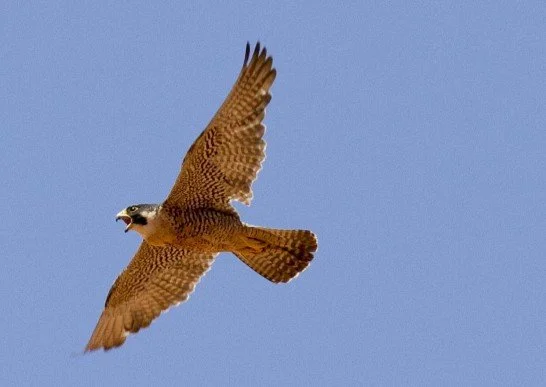
The falcon is a superb natural killer. A peregrine falcon in a dive is the fastest animal on earth. Consider what it would feel like to plunge groundward, three hundred feet per second, never losing sight of your prey.
Historically, falcons have been trained worldwide for thousands of years. Falconers train their falcons to hunt small animals, and then to return to the falconer’s arm.
Yeats’s powerful opening lines give us a sense of the loss of control, that a killing machine has been set upon the world. And that no one can manage it. Indeed, his next lines continue the sense of fear – and helplessness – such a situation portends:
‘Things fall apart; the center cannot hold;
Mere anarchy is loosed upon the world.’
In 1634, the Dutch began inflating the prices of their tulips, creating a demand that accelerated, along with dizzying price increases, until this first speculative bubble burst in 1637. By that time, a single tulip bulb commanded the same price as a house. By that time as well, the tulip buyers knew the situation was insane. But no buyer wanted to be the first to exit.
Time after time, over history, we have seen – or experienced – these bubbles and collapses. In the US, economic panics: 1819. 1837. 1857. 1893. 1929. 1987. 2007. All attributed to speculation, exuberance, bank failures and bankruptcies. Many followed by social unrest.
I remember in 2007, when funds managers were asked how they viewed the situation, and one said, “We knew this was insane and that it couldn’t keep going. But if I decided to pull out, my investors would kill me.” They danced until, as was famously said, the music stopped.
It is similar to an arms race. It rarely, if ever, ends well.
At the height of the Cold War, we had a concept of mutual assured destruction. This arose from the Cuban Missile Crisis of 1962, when we danced at the edge of extinction. I was six. I had no idea. Today, your young children don’t, either.
Mutual assured destruction. The notion that the extreme buildup of nuclear weapons would mean that a first annihilating exchange would immediately be followed by an annihilating response. Small wonder that mutual assured destruction was abbreviated “MAD.”
In 1983, we were treated to a movie called “Wargames.” Towards the end, the super-intelligent computer plays all the nuclear exchange scenarios, ending with the memorable line, “A most interesting game: the only way to win is not to play.”
Today, we are hearing from our artificial intelligentsia that we stand upon yet another precipice: that of an AI-generated nuclear exchange, or a biological weapon release, or something similar. Scenarios in which our indifferent digital creations wipe us from the earth.
Our falcon, they tell us, cannot hear its falconer.
We also are being swept along in a dizzying ride. Of investments. Five hundred billion dollars, from a recent estimate. Of data centers being built, some estimates placed at ten times our present numbers. And all this with opinions fermenting on all sides. A game which has all the elements of an arms race, combined with the exuberance (irrational or not: I leave that to you) of business models promising transformation or doom. Take your pick. The record is still on the turntable, and the music plays on.
So is this a technology-bounded end-time? Or simple marketing hype? Or something else altogether?
You are invited, if you wish, to debate this during dinner. There is only one rule for the debate: beware of certainty.
We are fighting at least four types of war:
Kinetic, ranging from feints near the Arctic Circle, down to the twin straits on either side of the Arabian Peninsula.
Asymmetric, as evidenced by drones and similar tactics ranged against impressive but oddly (in some cases) outmatched technology.
Cyber. For example, we learn now that the Jaguar Land Rover breach we analyzed last October was not caused by Scattered Spider or Shiny Hunters, but by Russian state actors – of course, vehemently denied by them.
And, finally (and most personally), Social. There is a war for the space between our ears. Social media and its twin, surveillance capitalism, conspire to create in us absolute certainty, one side or the other, that we are right and they are wrong.
Yeats again:
‘The best lack all conviction, while the worst
Are filled with passionate intensity.’
Thus we begin our season. As you ask yourselves whether this almost feels surreal, or these problems too rapid-fire to respond to, consider this question as well:
Is artificial intelligence dangerous to humanity?
Not whether we will somehow go extinct. But, more subtly, will aspects of our creativity, our inquisitiveness, our willingness to explore, be co-opted in the name of the ready (if inaccurate) answer, the expedient business solution, or the quick buck?
This is the framing of our world. You can take sides all you want. But the world is moving, and we with it. How shall we experience this ride? With that, we begin our season.